
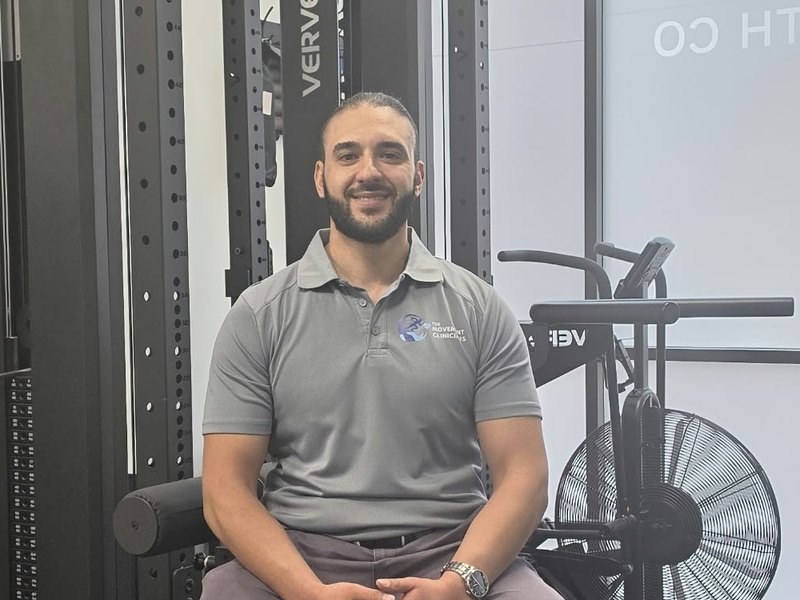
If your GP, case manager or a friend has suggested you see an Exercise Physiologist, you might be wondering what that actually involves, and how it differs from seeing a physio or a personal trainer. Here’s what you need to know, from the team at The Movement Clinicians (TMC) in Gregory Hills.
What is an Accredited Exercise Physiologist?
An Accredited Exercise Physiologist (AEP) is a university-qualified allied health professional who uses exercise as a form of treatment. To become accredited, AEPs complete a minimum of four years of university study in a course accredited by Exercise & Sports Science Australia (ESSA), including at least 360 hours of practical experience with people who have clinical conditions. ESSA is the body that accredits Exercise Physiologists in Australia.
Exercise Physiologists use active, exercise-based therapy. That means we prescribe a program to address your specific injury, health condition or disability, and we adjust it as you progress.
Movement as medicine
At TMC, we see movement as a form of medicine. When your doctor prescribes a medication, they think carefully about which medicine you need, the dose, how often you take it and any side effects or reasons you shouldn’t take it. We prescribe exercise in much the same way:
- Which medicine → which exercise. The specific exercises that suit your body, your condition and your goals.
- The dose → the intensity. How hard you work, and how many sets and repetitions you do.
- How often you take it → how often you exercise. How many times a week you do each part of your program.
- Side effects and contraindications → what to watch for and what to avoid. We screen for movements or loads that aren’t right for you yet, and keep an eye on how your body responds.
- Review appointments → progress checks. Just as a doctor checks whether a medication is working, we measure your progress and adjust the “prescription” as you go.
Who do Exercise Physiologists help?
ESSA describes AEPs as working with people who have acute, sub-acute or chronic medical conditions, injuries or disabilities. At TMC, people commonly see us for:
- Injury rehabilitation, including after a workplace injury, a car accident, a sports injury or surgery
- Chronic pain and chronic conditions, such as ongoing back or joint pain, diabetes, heart and lung conditions, arthritis and osteoporosis
- Exercise as part of your care for mental health, working alongside your GP or psychologist
- Exercise guidance during pregnancy and after having a baby
- Strength and conditioning, whether you’re returning to exercise, playing sport or wanting to stay strong as you get older
What happens when you see an Exercise Physiologist?
Every person is different, but working with an Exercise Physiologist usually follows four steps.
- Assessment. We talk about your health, your history, what you’re finding hard right now and what you’d like to get back to. Depending on your situation, we may also look at how you move, your strength, balance and fitness.
- A plan built around you. Your goals are linked to everyday life, such as getting back to work, walking the dog, playing with the kids or returning to sport.
- Supervised exercise and education. We teach you your exercises, check your technique and explain why each one matters, so you can keep moving between sessions.
- Reviewing progress. We track meaningful, measurable progress and adjust your program as you go. With your consent, we keep your GP, case manager or support coordinator updated.
Where appropriate, hands-on treatment such as soft tissue therapy can also be part of your session. Soft tissue therapy is an extended scope of practice for Exercise Physiologists, and our EPs are trained and qualified to provide it. We use it to complement your exercise program, or to help you tolerate more activity so you can build up what you’re able to do.
Exercise Physiologist, physiotherapist or personal trainer?
These roles can overlap, and many people see more than one of them at different stages.
- Physiotherapists specialise in assessing and diagnosing injuries, and often use manual and other passive therapies (treatments done to you), such as joint mobilisation, massage and taping, alongside exercise. They’re often a first port of call soon after an injury.
- Accredited Exercise Physiologists specialise in active therapies (treatment you take part in), using exercise and movement to help you recover from injury and manage long-term health conditions.
- Personal trainers generally work with healthy people on fitness goals. AEPs are university-trained to work with people who have medical conditions, injuries or disabilities.
Physios and Exercise Physiologists often work together. If you’re unsure who to see first, your GP can help, or you’re welcome to ask us.
Do you need a referral?
You don’t need a referral to see an Exercise Physiologist privately. If your sessions are funded, the scheme may have its own requirements, for example a GP Chronic Condition Management Plan for Medicare, an approved claim for workers compensation or CTP, funding in your NDIS plan, or arrangements through your Support at Home provider. Eligibility rules apply to each scheme. Our funding and fees page explains the options.
Seeing an Exercise Physiologist in Gregory Hills
Our Gregory Hills clinic is inside Allied Health Co., Level 1, HQ Building, 39–47 Lasso Road, with free on-site parking and lift access. We’re open on weekdays, and weekend appointments are available on request. If getting to the clinic is difficult, we also offer home visits across Macarthur and telehealth.
If you’d like to take the next step, you can book online or call us on 0490 776 141. Health professionals can refer a patient here.
Clinically reviewed by Andrew James – Accredited Exercise Physiologist (BAppScExPhys/AEP/AES/ESSAM).
This article is general information only and isn’t a substitute for advice about your own health. Please speak with your GP or an Accredited Exercise Physiologist about your situation.